How to Start Forex Trading in Thailand: A Beginner's Step-by-Step Guide
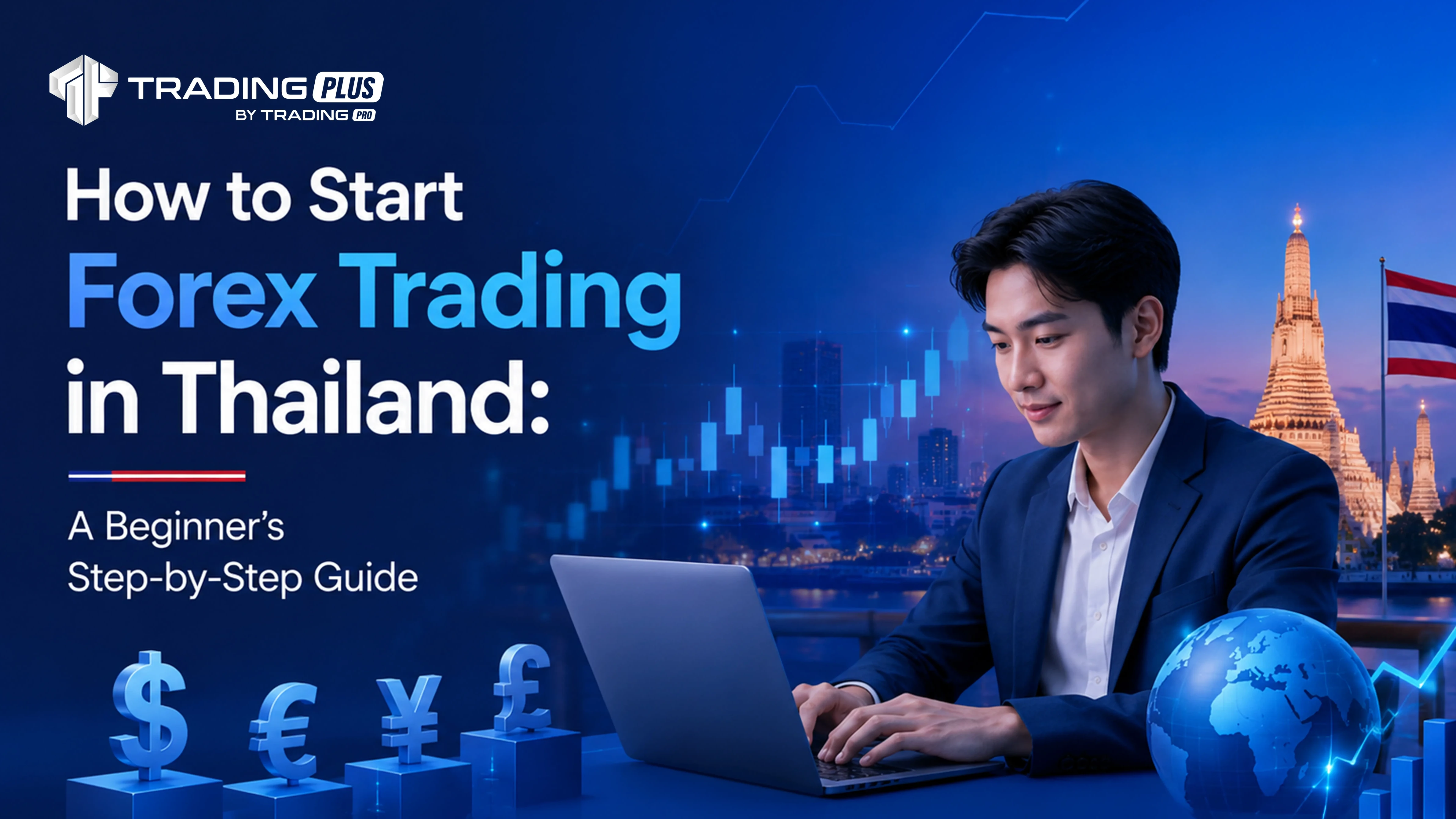
Forex trading is one of the most accessible ways to build an income from anywhere in the world, and Thailand is no different. Whether you're in Bangkok, Chiang Mai, or anywhere in between, everything you need to get started is on your phone or laptop right now.
But starting the right way matters more than starting fast. This guide is written for people who are completely new to forex and want a clear, honest explanation of how it works before putting any money on the line.
We'll walk through what forex actually is, how a demo account works, what your first real trade looks like, and how traders in Thailand are going further by accessing funded accounts through prop firms like TradingPLUS.
What Is Forex Trading?
Forex means foreign exchange. When you trade forex, you're buying one currency and selling another at the same time, with the goal of profiting from changes in the exchange rate between the two.
If you believe the US dollar will strengthen against the Thai baht, you buy USD and sell THB. If the dollar rises as you expected, you close the trade at a profit. If it falls, you take a loss. Every forex trade follows this same logic: you're speculating on which direction a currency pair will move.
The most traded pair for beginners: EUR/USD (Euro vs US Dollar). It's stable, well-documented, and the most liquid pair in the world, which makes it the best starting point for new traders.
Forex markets are open 24 hours a day, five days a week. Thai traders can participate during the Asia session, which begins early in the morning and gradually overlaps with the London and New York sessions as the day continues.
Demo Account vs Real Account: What's the Difference?
Before any beginner puts real money into forex, they should spend time on a demo account. Here's how the two compare in plain terms.
A demo account
- Uses virtual money. There is no financial risk.
- Has identical charts and real market conditions.
- Is the right environment for learning and testing strategies.
- Is free to use and available immediately on sign-up.
A real account
- Uses real capital. Profits and losses are actual money.
- Requires the same skills you built on demo, but now with emotional stakes.
- Should only come after you are seeing consistent results in the demo.
- Can be funded personally or through a prop firm evaluation.
Most beginners should spend at least two to four weeks on a demo account before moving to real capital. Not just clicking around, but testing a specific strategy and tracking whether it works consistently.
How TradingPLUS fits in: The TradingPLUS challenge evaluation is a structured demo environment with real accountability. You trade on simulated capital, follow a set of rules, and if you hit the profit target, you receive a live funded account. It's a smarter path than funding a small personal account and learning through expensive losses.
Not sure what a prop firm is? Read our full explanation here
How to Start Forex Trading in Thailand: Step by Step
Step 1: Learn the Five Core Concepts First
You don't need months of study before your first trade, but you do need to understand these five things. Everything else in forex is built on top of them.
- Currency pairs: Forex is always traded in pairs such as EUR/USD or USD/THB. The first currency is what you're buying and the second is what you're selling.
- Pips: A pip is the smallest standard unit of price movement. Your profit or loss on any trade is measured in how many pips the price moved in your favour or against you.
- Lot size: This controls how much currency you're trading per position. Beginners should always start with micro lots to keep risk small while learning.
- Stop loss: A pre-set price level where your trade closes automatically to prevent further loss. Every trade you place should have a stop loss. No exceptions.
- Take profit: The price level where your trade closes automatically and locks in your gain. Set this before you enter the trade, not while it's running.
Step 2: Open a Free Demo Account
Once you're comfortable with the basics, open a demo account through TradingPLUS. You'll receive a virtual balance to trade with in real market conditions, with no money at risk.
Use your demo time with focus. Pick one currency pair, apply one strategy, and record every trade you take. The goal is not to win every trade on demo. The goal is to understand whether your approach works across different market conditions before real money is involved.
Suggested demo period: Two to four weeks of focused, strategy-based practice. Consistency matters more than speed.
Step 3: Walk Through Your First Trade Before You Place It
Your first real trade should never be a surprise. Before you click the button, you should know exactly why you're entering, where you'll exit if you're wrong, and what you're aiming for if you're right.
Here's what a basic EUR/USD trade setup looks like:
- You analyse the chart and identify a reason to buy based on a pattern or signal you've practised on demo.
- Entry price: You buy EUR/USD at 1.0850.
- Stop loss: You set it at 1.0820. That's 30 pips below your entry. If the market moves 30 pips against you, the trade closes automatically and your loss is contained.
- Take profit: You set it at 1.0910. That's 60 pips above your entry. If the price reaches this level, the trade closes and you take the profit.
- Risk-reward ratio: You're risking 30 pips to potentially make 60. A 1:2 ratio means you only need to be right four times out of ten to be profitable overall.
This framework applies to every trade you will ever place. If you cannot define your entry, stop loss, take profit, and risk-reward before clicking buy or sell, the trade is not ready.
Step 4: Decide: Personal Account or Prop Firm Challenge
Once you're trading consistently on demo, you have two routes forward.
Option A: Fund a personal trading account.
You deposit your own money and trade it directly. All profits are yours but all losses come from your own pocket. For most Thai beginners with limited starting capital, growth is slow because the account size limits what you can earn per trade.
Option B: Take a TradingPLUS prop firm challenge.
You pay a single challenge fee. Pass the evaluation by hitting the profit target while following the rules, and TradingPLUS funds you with a live account. Account sizes start from $10,000. Your personal savings are never used as trading capital.
Why most serious Thai traders go with Option B: A funded account gives you far more earning potential per trade than a small personal deposit. The evaluation structure also builds the disciplined habits that make traders consistently profitable over time.
See TradingPLUS funded account options starting from $10,000
Step 5: Trade, Track, and Keep Improving
Whether you start with a personal account or a funded one through TradingPLUS, the habits that separate improving traders from those who stay stuck are the same.
- Follow your trading plan on every session, not just when it feels easy.
- Keep a trade journal. Write down your entry reason, your exit, the result, and one thing you would do differently next time.
- Review your journal at the end of each week, not during live sessions.
- Never increase your risk per trade to recover a loss. That's how small losses become account-ending ones.
Progress in forex isn't about winning every trade. It's about making better decisions more consistently over weeks and months. The traders who are still trading three years from now are the ones who treated it as a skill to build, not a lottery to win.
The single most underused habit in trading: Reviewing closed trades after the session, not watching open ones tick by tick.
Ready to Move From Demo to Funded?
The difference between a demo account and a fully funded live account is smaller than most beginners expect. TradingPLUS bridges that gap with a fair evaluation designed to reward consistency and discipline, not luck.
You don't need years of experience. You need a strategy that works, an understanding of the rules, and the patience to follow your plan. Traders across Thailand and Southeast Asia are already on the other side of that challenge.
Create Your Free TradingPLUS Account and Start Today
Join the TradingPLUS Community
Connect with traders across Thailand and Southeast Asia sharing real insights, strategy tips, and funded trading experiences every day.
Discord | Instagram | Facebook | LinkedIn | Telegram
Frequently Asked Questions
How do I start forex trading in Thailand as a complete beginner?
Open a free demo account, learn the five core concepts (currency pairs, pips, lot size, stop loss, take profit), and practise one strategy for two to four weeks. Once you're seeing consistent results, choose between funding a personal account or taking a TradingPLUS prop firm challenge.
Is forex trading legal in Thailand?
Yes. Individual forex trading is permitted in Thailand and Thai traders regularly access international platforms and prop firms. Using a reputable, transparent platform like TradingPLUS keeps you within a legitimate and well-structured framework.
What is a demo account and do I really need one?
A demo account is a free practice environment that uses virtual money but mirrors real market conditions exactly. Every beginner needs one. It lets you test your strategy and learn the platform without any financial risk. Skip the demo phase and you are essentially paying for lessons with real money.
What is a prop firm and how does it work for traders in Thailand?
A prop firm provides traders with its own capital in exchange for a share of the profits. You pass a structured evaluation, prove you can trade with discipline, and receive a funded live account. TradingPLUS offers funded accounts from $10,000 and is fully accessible to traders based in Thailand.
How much do I need to start forex trading in Thailand?
With TradingPLUS you only need to cover the challenge fee. The trading capital comes from the firm once you pass the evaluation. If you prefer a personal account, you can start small, but the funded account route gives you access to much more capital without putting your own savings at risk.
What is the best way to place my first forex trade in Thailand?
Define your entry reason, set a stop loss and take profit before you click buy or sell, and only trade pairs you've practised on demo. Start with EUR/USD, use micro lots, and keep your risk per trade at one to two percent of your account. Trade your plan, not your feelings.