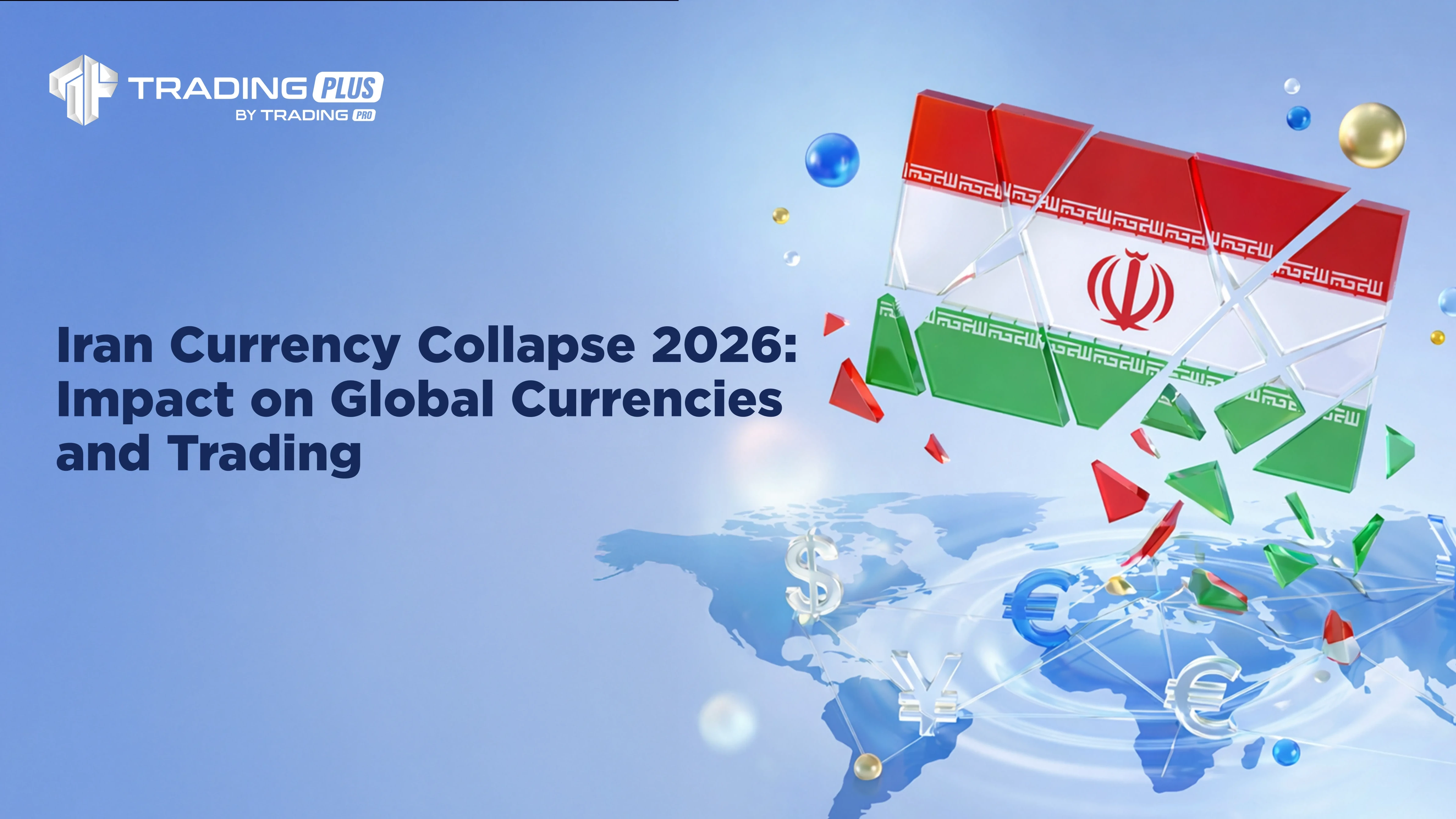
Iran Currency Collapse 2026: Impact on Global Currencies and Trading
Iran Currency Collapse in 2026: What’s Happening?
Iran’s national currency, the Iranian rial, has plunged to historic lows in early 2026, reflecting a deepening economic crisis. The exchange rate has deteriorated dramatically on the free market, reportedly trading at over 1.4 million rials per US dollar, while inflation has surged above 40% as basic goods become increasingly unaffordable for ordinary citizens.
The rapid depreciation of the rial has sparked widespread protests across major cities in Iran, beginning December 2025 and expanding into January 2026. Economic hardship increasingly driven by currency weakness has quickly transformed into broader dissent against political leadership.
Why the Iranian Currency Is Collapsing
The rial’s descent to record lows has occurred against a backdrop of intense economic pressures:
- Tight international sanctions cutting Iran off from global financial systems and foreign investment.
- A resurgence of geopolitical tensions and military conflicts in the region.
- Domestic economic mismanagement, including reduced import capacity and soaring basic costs.
These factors have dramatically reduced confidence in the rial, leading to currency depreciation that feeds directly into inflation, eroding purchasing power and destabilizing local markets.
Impact on Global Currency Markets
1. Spillover to Emerging Market FX Sentiment
While Iran’s currency is largely restricted from mainstream financial markets, the collapse contributes to broader emerging market risk aversion. When a sovereign currency rapidly depreciates alongside sociopolitical unrest, traders tend to shift capital toward traditional safe-haven currencies such as:
- US Dollar (USD)
- Swiss Franc (CHF)
- Japanese Yen (JPY)
This flight to safety can strengthen major reserve currencies relative to emerging market and commodity-linked currencies like the Australian Dollar (AUD) or Mexican Peso (MXN).
2. Broader Risk Sentiment Effects
Currency collapses often act as a proxy for instability. Even if the Iranian rial itself isn’t actively traded in major forex markets, the risk-off sentiment associated with economic and political turmoil can spill over into broader markets:
- Weak risk appetite pushes traders away from carry trades and emerging-market assets.
- Volatility spikes can influence global forex indices and cross-asset correlations, especially during periods of macroeconomic uncertainty.
3. Commodity Currencies & Oil Prices
Iran is a significant oil producer, even if some output is restricted by sanctions. A deepening economic crisis tied to currency instability can influence global perception of Middle East supply risk. This can ripple into:
- Crude oil prices — fears of supply disruption can lift prices, which in turn affect CAD (Canada), NOK (Norway), and other energy-linked currencies.
- Commodity-linked FX — AUD and NZD may react to shifts in commodity price expectations and broader risk sentiment.
Strong safe-haven flows (USD up) typically exert downward pressure on commodity currencies, while fears of supply instability can create mixed flows as markets price geopolitical risk premiums.
Trading Considerations Amid the Iranian Crisis
1. Monitor Risk Sentiment Indicators
Because the rial is not a widely traded global currency, its collapse serves as a barometer for risk appetite. Traders should watch:
- VIX and FX volatility indexes
- USD strength against EM currencies
- Capital flows into safe havens
These signals can influence timing and positioning in both forex and multi-asset portfolios.
2. Safe-Haven Currency Strategies
In periods of geopolitical and economic stress, traders often adjust exposure toward assets that historically strengthen in risk-off conditions:
- USD crosses — look for sustained USD strength against EM/commodity-linked FX.
- JPY and CHF — often appreciate when volatility rises.
- Gold and Treasuries — indirect but useful safety proxies.
Successful trading during such times rests on watching macro indicators, not just one isolated event.
3. Avoid Overreacting to Localized Crises
While the rial crash is severe for Iran, markets often price in turmoil before global contagion sets in. Overreacting can lead to discounted opportunities elsewhere:
- A stabilizing USD might lead to mean reversion trades once volatility recedes.
- Emerging markets often recover as broader sell-offs end.
Avoid assuming correlation where none fundamentally exists and always validate with broader macro data.
What Traders Should Watch Next
To assess ongoing impact, traders should follow:
- Geopolitical developments in the Middle East
- Sanction policy updates from major economies
- Inflation and commodity price movements
- Risk sentiment indicators like CDS spreads and bond yields
Monitoring these will help gauge whether the rial collapse remains a localized economic crisis or becomes part of a broader shift in global forex dynamics.
Final Thoughts
The collapse of the Iranian rial in 2026 reflects deeper economic stress and geopolitical tension within the region. While the rial itself is not a major global trading currency, the risk-off effects triggered by such a collapse can influence broader forex markets, especially for emerging market and commodity-linked currencies.
For traders, the key is not just watching one event, but understanding how risk sentiment, safe-haven flows, and commodity price expectations shift in response.
Stay Informed With TradingPLUS
Want to navigate global market volatility with confidence?
Follow TradingPLUS on Social Media for daily market insights, macro analysis, and forex commentary.
Instagram | Facebook | LinkedIn | Telegram