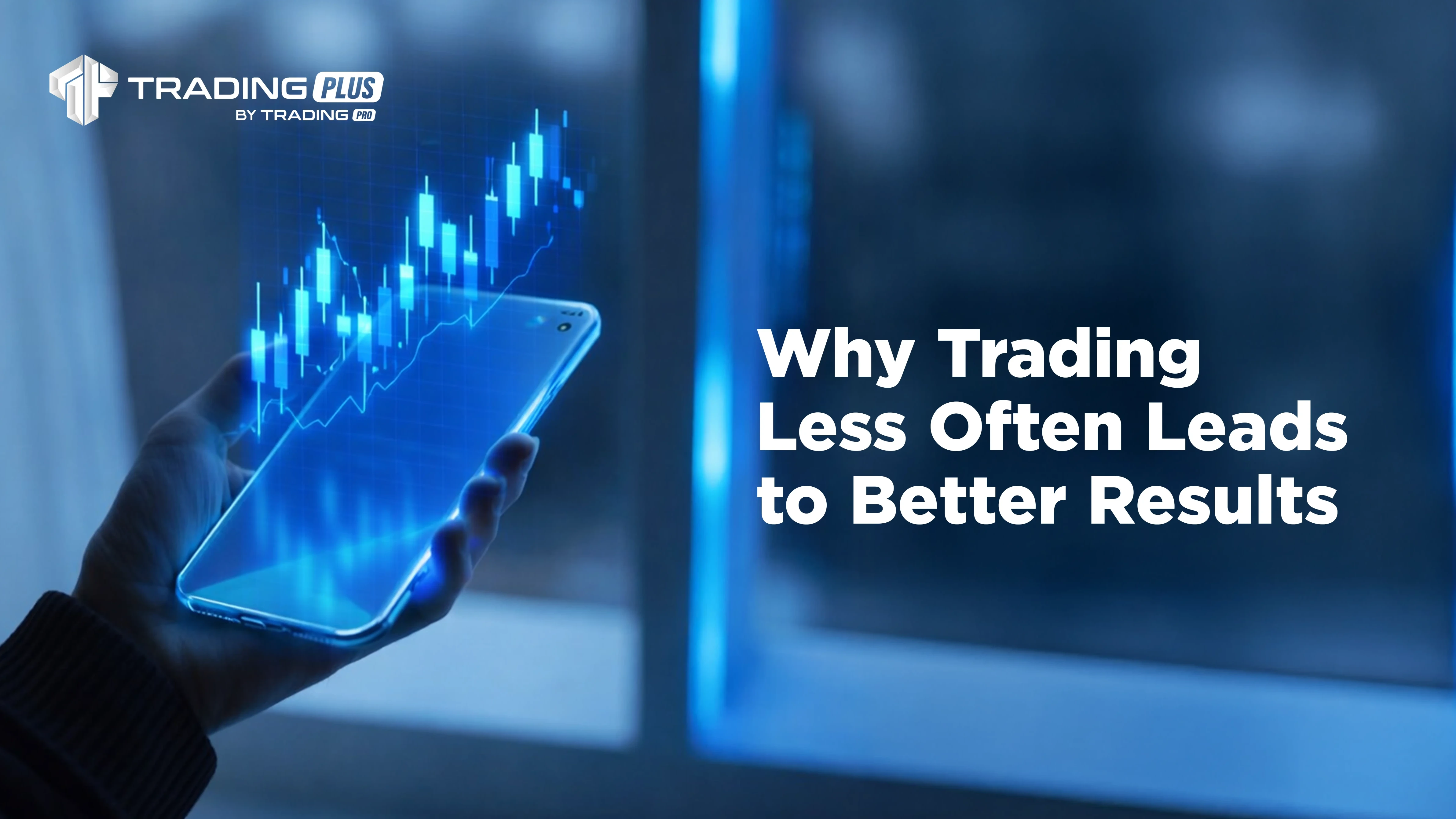
Why Trading Less Often Leads to Better Results
One of the hardest lessons traders learn is also one of the most important:
More trading does not equal better trading.
In fact, many traders start seeing better results only after they begin trading less. This idea feels counterintuitive in a world where activity is often mistaken for progress, but in professional trading — especially prop trading, restraint is a competitive advantage.
The Illusion of Productivity in Trading
Trading feels productive. Clicking buttons, entering positions, and reacting to charts gives the sense that something is happening.
But activity is not the same as effectiveness.
Most losing traders don’t fail because they lack opportunities, they fail because they take too many low-quality trades. Over time, those trades:
- Increase transaction costs
- Create emotional fatigue
- Lead to rule-breaking
- Erode confidence
Trading less forces selectivity, and selectivity improves quality.
Fewer Trades, Better Decisions
When traders know they won’t trade often, they become more patient.
They wait for:
- Clear structure
- Strong alignment with their plan
- Favorable risk-to-reward conditions
This patience naturally filters out impulsive entries and emotional decisions. Each trade is approached with intention instead of urgency.
Why Overtrading Hurts Performance
Overtrading usually isn’t a strategy issue, it’s a psychological one.
It often comes from:
- Fear of missing out
- Desire to recover losses quickly
- Boredom
- Pressure to “do something”
In prop trading environments, overtrading is especially dangerous because it increases the chance of violating daily loss limits and drawdown rules.
Trading Less Improves Risk Control
Every trade carries risk, regardless of confidence level.
By trading less often, traders:
- Expose their account to fewer random outcomes
- Reduce cumulative drawdown
- Preserve emotional capital
Risk becomes easier to manage when decisions are spaced out and deliberate.
Why Professional Traders Trade Less Than You Think
Many professional and funded traders take:
- One or two trades per session
- Some days, no trades at all
They understand that the market does not owe them opportunities every day. Their edge comes from waiting, not forcing participation.
Less Trading, More Consistency
Consistency doesn’t come from trading frequently — it comes from repeating the same high-quality behavior.
Trading less:
- Reduces emotional swings
- Makes performance easier to evaluate
- Encourages rule adherence
Over time, this leads to smoother equity curves and more stable results.
Final Thoughts
Trading less often isn’t about being passive — it’s about being selective.
The traders who last are not the busiest ones. They are the ones who know when not to trade. In prop trading, restraint isn’t weakness, it’s discipline in action.
Trade With Purpose at TradingPLUS
If you believe quality matters more than quantity:
Register with TradingPLUS and trade in an environment that rewards discipline and patience.
Follow TradingPLUS on Social Media for professional trading insights and education:
Instagram | Facebook | LinkedIn | Telegram